Beni Ourain, Berber, Boujad: Moroccan rug styles explained
Ivory and calm, bright and freehand, or warm and faded: what makes each Moroccan rug style different, and which one suits your room.

Morocco has many rug-weaving traditions, and the names you see on Moroccan rugs come from them. Most of these names point to a region or a group of tribes in the Atlas Mountains or the plains around them, where women have woven rugs for their own homes for generations: thick and warm for mountain winters, bright and personal, made from the wool at hand.
Today, those names are used to describe a style. Here is what each one means, and how to tell them apart.
About our rugsWe name our rugs after the style they follow. We design every ZenRug ourselves, and our weavers in Oued Zem, Morocco, knot each one by hand, to order. A ZenRug in the Beni Ourain style is a new rug woven in that tradition, not an old rug collected from a village.
Beni Ourain
The Beni Ourain are a group of Amazigh (Berber) tribes from the Middle Atlas mountains, where winters are cold and rugs were made to be slept on and wrapped in. Their rugs are the best known of all Moroccan styles.


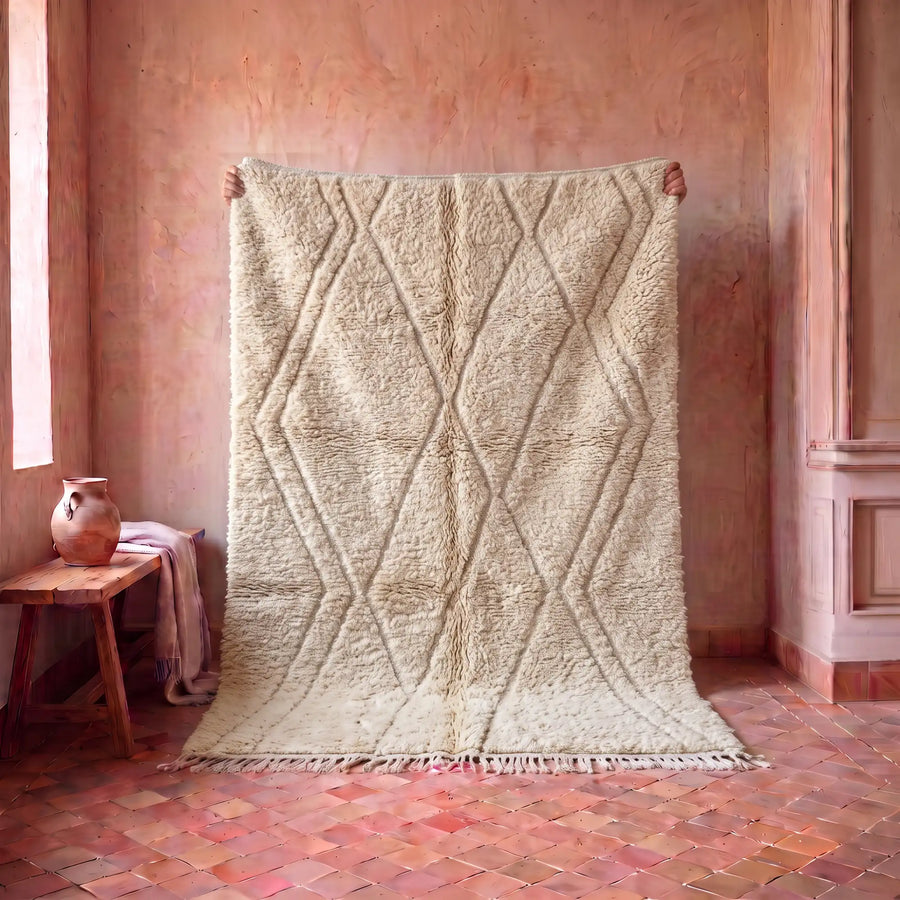
- What it looks like: a natural ivory or cream ground with dark brown, grey or black lines, usually diamonds or a loose lattice. The lines are drawn freehand, so they wander a little.
- How it feels: thick, deep and soft. This is the plushest of the Moroccan styles.
- Where it works: almost anywhere. The quiet palette sits well with modern, Scandinavian and minimal interiors, which is why these rugs became a favorite of 20th-century modern designers.
Pale wool shows dirt more than dark wool, so a Beni Ourain is happiest in a living room or bedroom rather than right by the front door. See our Beni Ourain rugs.
Freehand Berber
Freehand Berber rugs come from a High Atlas tradition of knotting bright, hand-drawn motifs onto a pale wool ground. They are known for their color and freedom: every motif is placed by eye.


- What it looks like: an ivory or white ground with motifs in pink, red, orange, blue, green and black. The motifs are often asymmetrical, and traditional ones were personal to the woman who wove them.
- How it feels: a medium pile, softer than it looks and a little flatter than a Beni Ourain.
- Where it works: anywhere you want the rug to be the piece people notice first. A freehand Berber rug brings energy to a plain room.
Boujad
Boujad is a town on the plains west of the Middle Atlas. Its rugs are the warm side of Moroccan weaving.


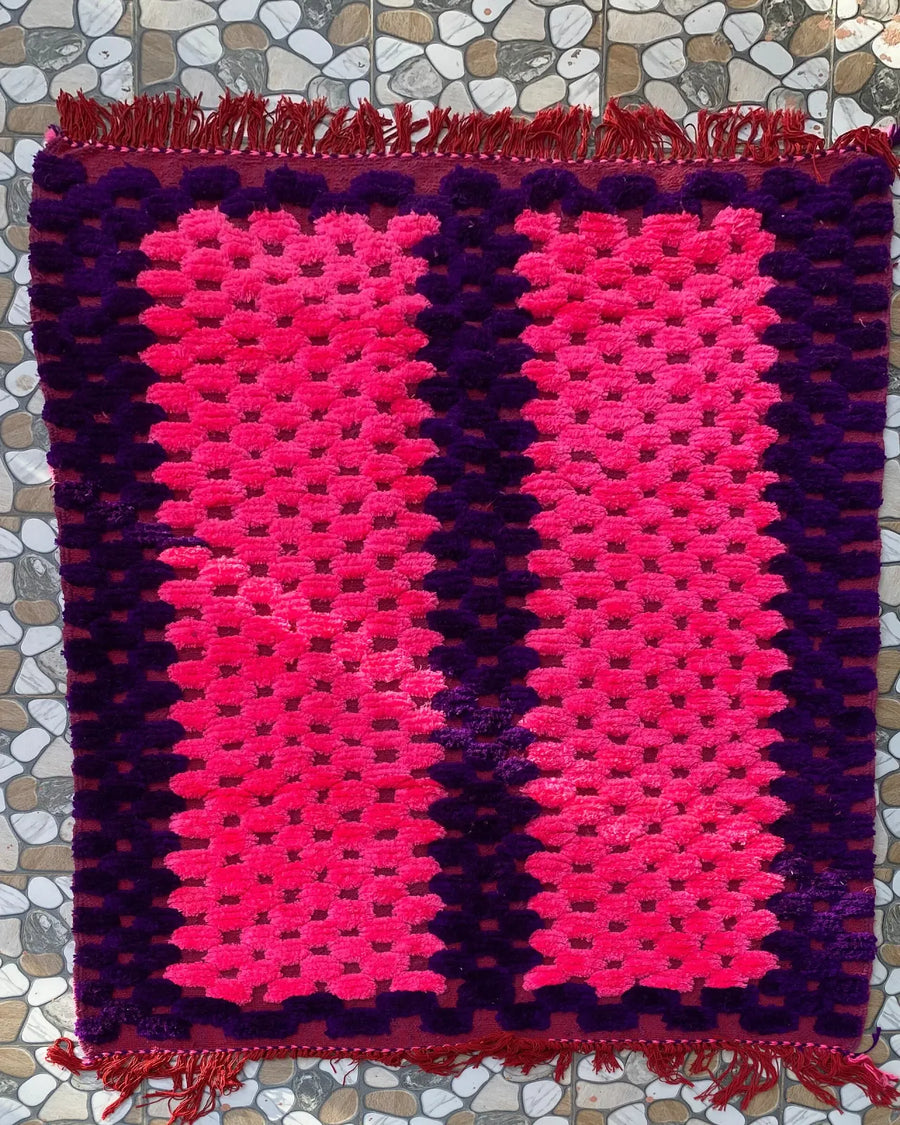
- What it looks like: a colored ground, usually pink, red, orange or purple, with abstract geometric shapes in other warm tones. Older Boujad rugs are prized for their soft, faded colors.
- How it feels: a medium pile with a relaxed, slightly irregular surface.
- Where it works: bedrooms, reading corners and any room that needs warmth. A Boujad is easy to live with: its colors hide everyday wear well.
See our Boujad rugs.
Colorful and modern designs
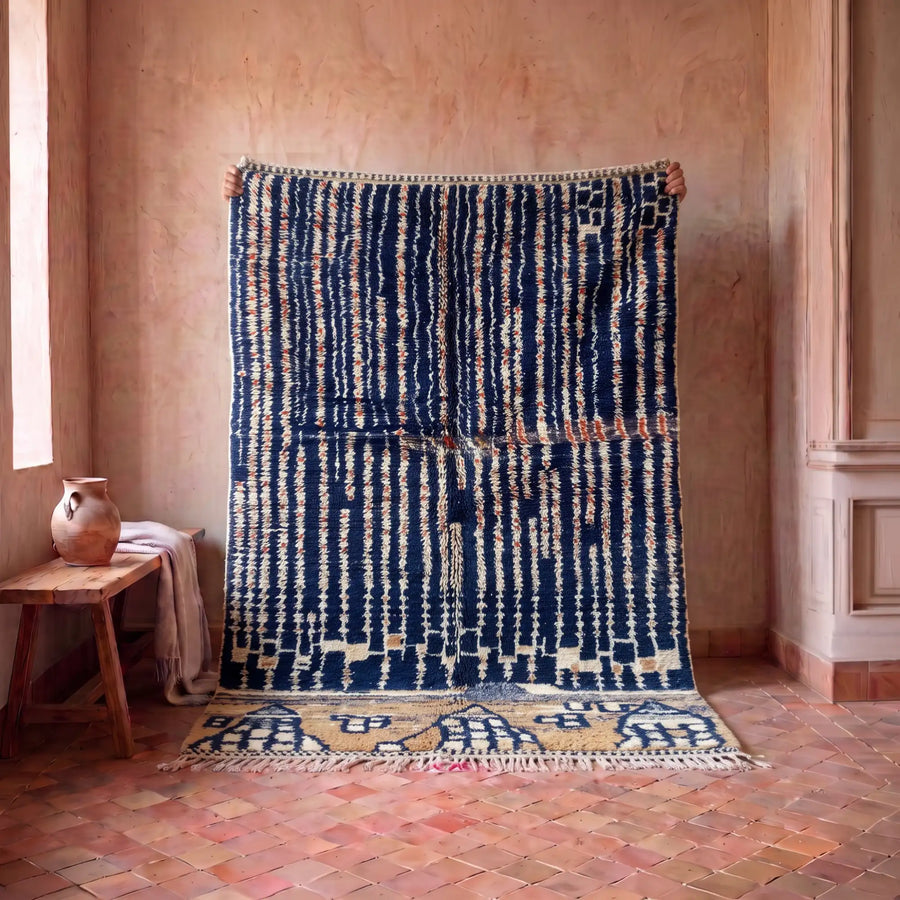
Beyond the classic styles, many Moroccan rugs today are simply colorful: stripes, zigzags, color blocks and abstract shapes, knotted the same way as a Beni Ourain or a freehand Berber rug but with a more graphic, contemporary look. Many of our own designs belong here.


See our colorful Moroccan rugs, or our runners for hallways and kitchens.
Other names you may come across
- Kilim and hanbel: flat-woven rugs with no pile. Light, thin and often reversible. They are a different technique from the knotted rugs above.
- Boucherouite: rag rugs made from strips of recycled fabric, often very colorful.
- Vintage: a rug that has already been used for years, usually with faded colors and a worn pile. Every ZenRug is new, made to order.
The styles side by side
| Style | Ground | Pile | Best for |
|---|---|---|---|
| Beni Ourain | Ivory or cream, dark lines | Thick and deep | Calm living rooms and bedrooms |
| Freehand Berber | Ivory, bright motifs | Medium | A rug as the centerpiece |
| Boujad | Pink, red or orange | Medium | Warm, cozy rooms |
| Colorful | Any color, graphic designs | Medium to shag | Modern and playful rooms |
Whichever style you choose, the rug is made the same way: wool, a wooden loom and weeks of knotting by hand. If you'd like to see how, read how a ZenRug is made.